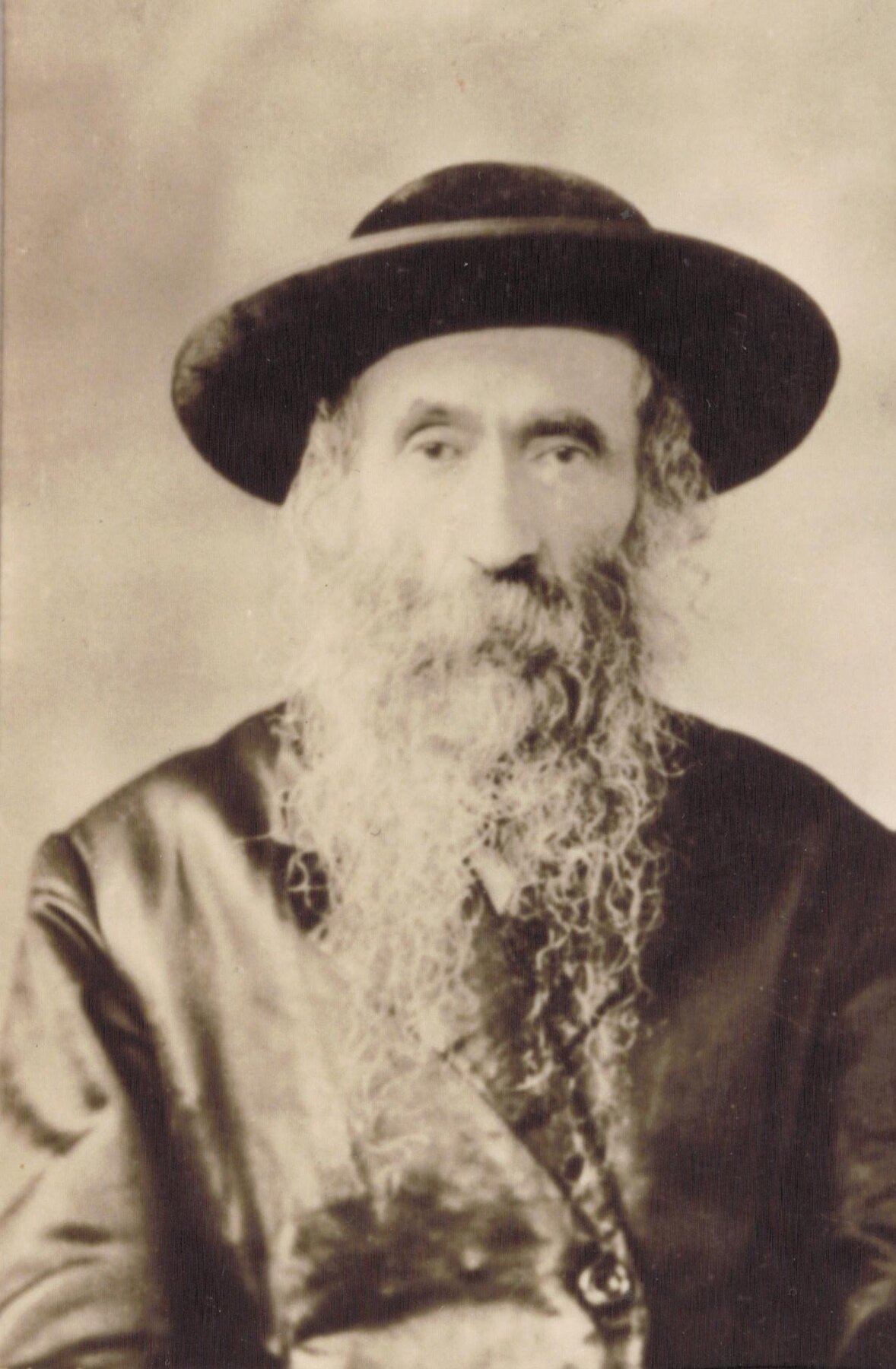
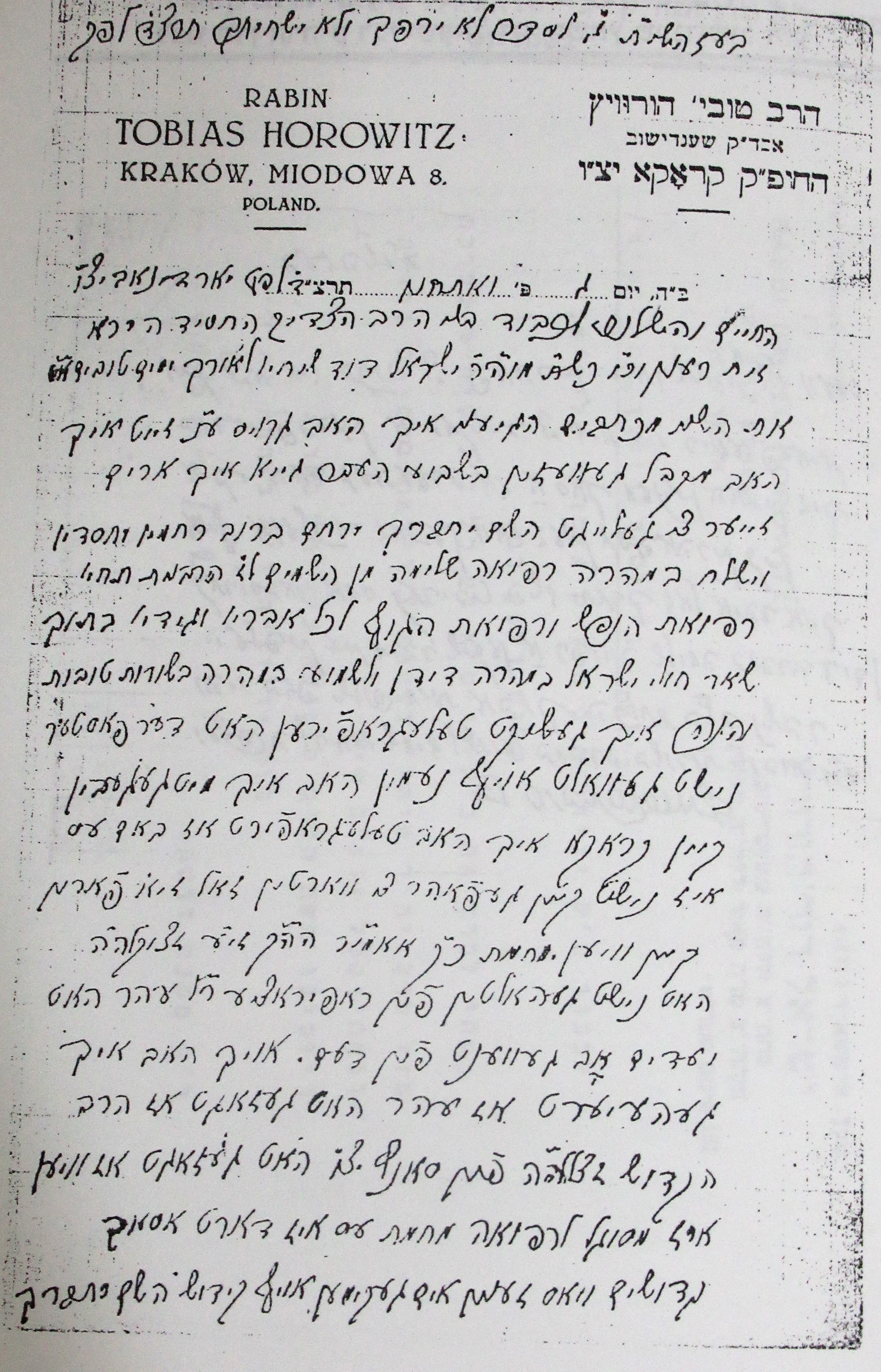
Historic portrait of Maran Rabbi Tuvia Horowitz, the previous Shendishover Rebbe
תולדותיו
Biography
Rabbi Tuvia succeeded his father, Rabbi Avraham, and led the Shendishover court through a new period in Galicia.
His three American visits—in 1923, 1925–1926, and 1928–1929—brought the tish, counsel and brachah, and communal responsibility to Chassidim who had crossed the Atlantic.
01תורתו ודרכו
Torah and derech
His Torah and הנהגה continued the founding path through tefillah, the Shabbos tish, personal guidance, and care for widows, orphans, and other needs of the ציבור.
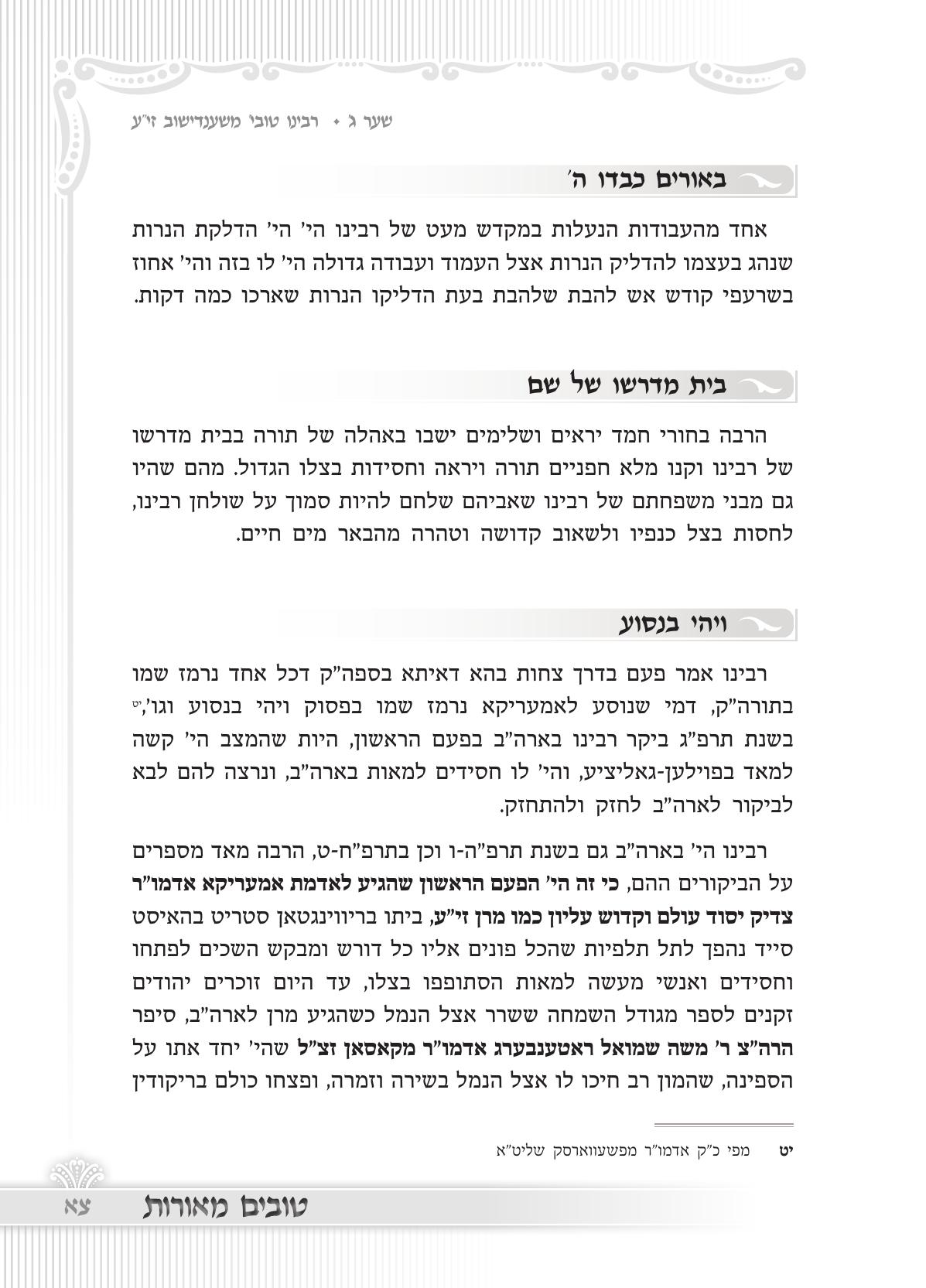
Tovim Me’orot preserves teachings, practices, dates, named witnesses, and firsthand accounts attached to his American visits.
On Rivington Street, close to one hundred people are recorded at a Friday-night tish, among them elder Chassidim who had known Galician tzaddikim.
People came for Shabbos and Yom Tov, counsel and brachah, and the atmosphere of a Chassidic court in America.
03ביתו והמשך השלשלת
Family and continuation
When he moved to Kraków, his eldest son Rabbi Asher Lemel served as Rav in Shendishov. Before returning to Poland in 1929, Rabbi Tuvia appointed another son, Rabbi Yisroel Dovid, to lead the American beis medrash and ציבור.
Shendishov, Kraków, and the Lower East Side mark the principal settings of his הנהגה. The final American departure is dated to 17 Adar I 5689 (February 27, 1929).
Letters, voices, memories, and occasions open here in their proper context.
Each item remains one permanent archive record. From this Rebbe’s center it opens directly—not as a duplicate, but through the person, date, place, and source to which it belongs.