ניו יארק · י״א כסלו תש״ט
The congregation that gathered around Rabbi Yisroel Dovid
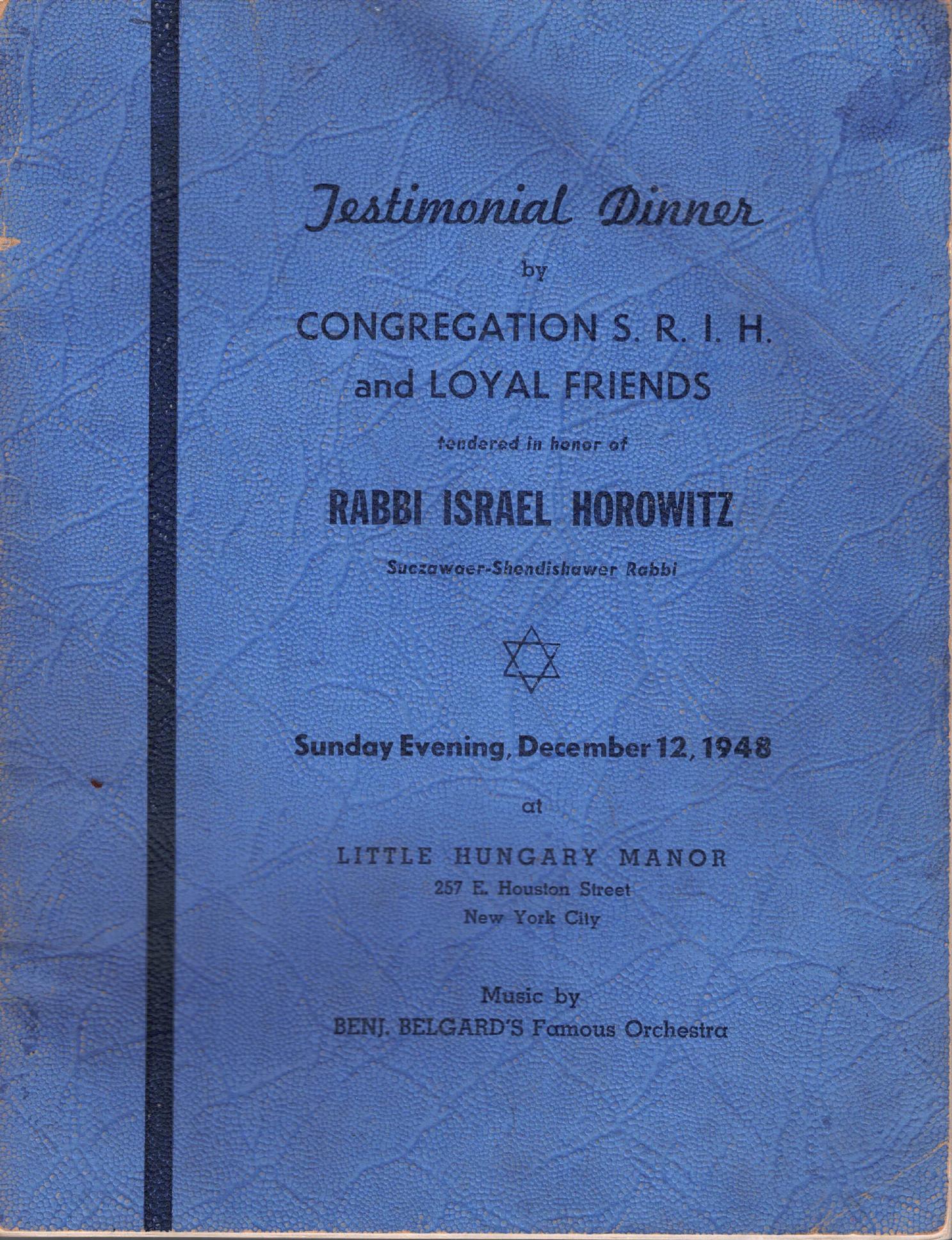
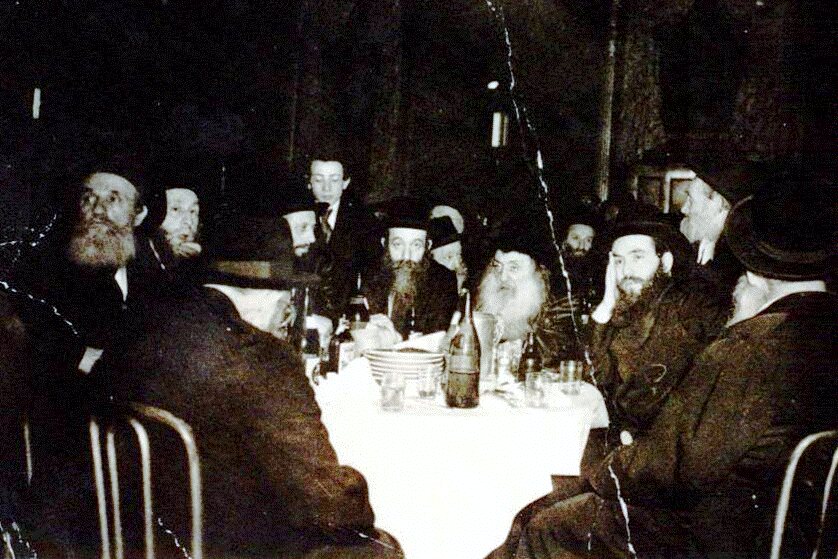
On Sunday evening, December 12, 1948, the Shendishover congregation and its friends gathered on the Lower East Side to honor their Rebbe, Rabbi Yisroel Dovid Horowitz—and to strengthen the sacred work that had grown around his home and beis medrash.
An evening on East Houston Street
The dinner was held at Little Hungary Manor, 257 East Houston Street, in the heart of the neighborhood where so many immigrant congregations, landsmanschaften, and Chassidic shtiblech had found a home. Benji Belgard’s orchestra supplied the music; honorary chairmen, journal officers, an arrangement committee, and a reception committee carried the work of the evening.
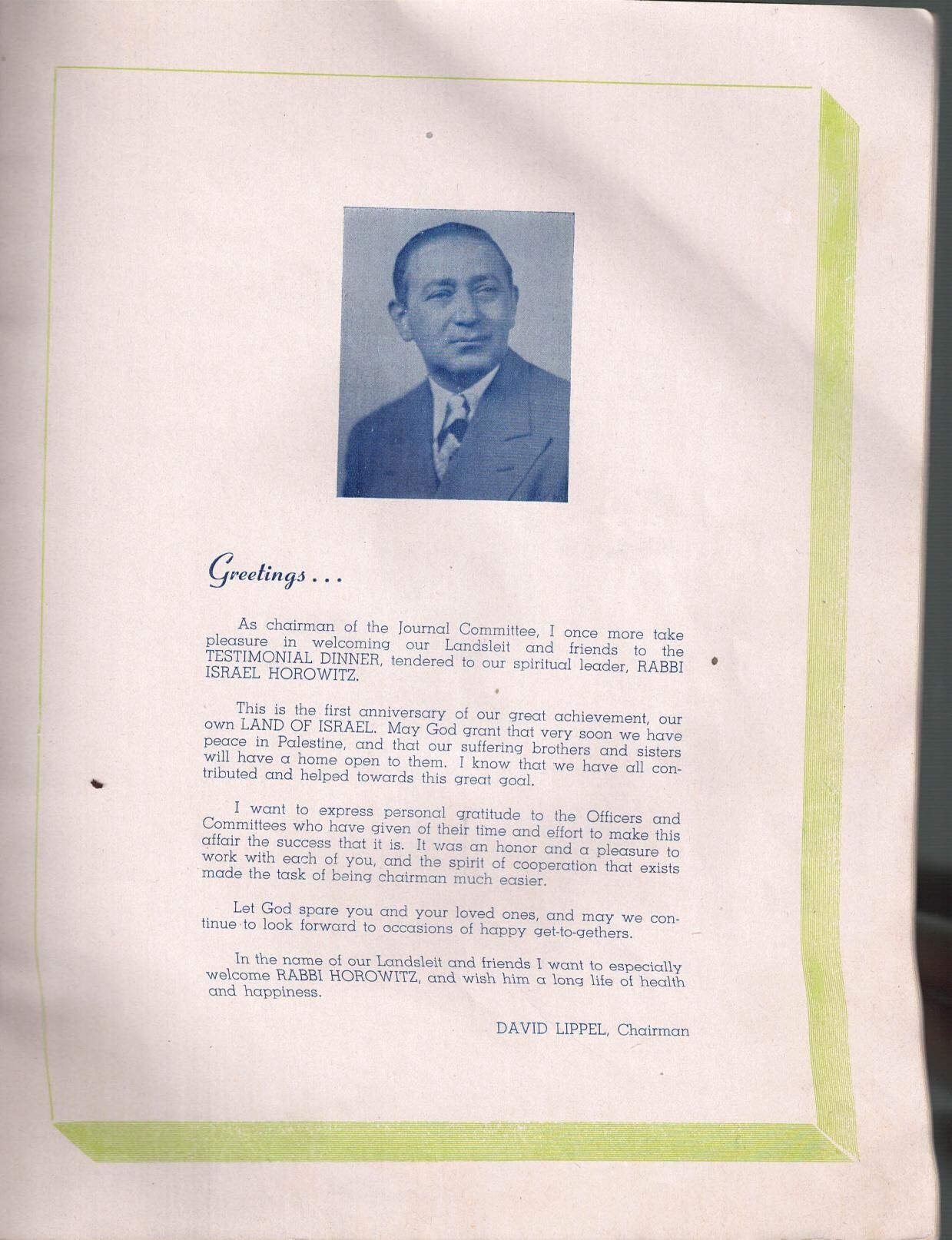
The formal title on the cover—“Testimonial Dinner by Congregations R.I.H. and Loyal Friends”—speaks in the language of American Jewish communal life. Inside, however, the Yiddish greeting and the honor accorded to the Rebbe belong unmistakably to the world the participants had brought with them from Galicia.
The Rebbe at the center
Rabbi Yisroel Dovid Horowitz had carried the Shendishover court through years in which religious Jewish life in America demanded unusual strength. His home and beis medrash were places of tefillah and tish, but also of counsel, hospitality, aid, and practical help for individuals and families.
The dinner honored that work while supplying the means to continue it. The journal’s English chairman writes of appreciation for what the Rebbe had done for the congregation and for the wider public. This was not a distant ceremonial tribute. It was a gathering of people who regarded the Rebbe and his work as part of their own lives.
A ציבור built by many hands
The last page preserves the names of those who assumed responsibility. Some lent public honor to the evening; others prepared the journal, arranged the hall, received the guests, and managed the countless details that turn an idea into a communal occasion.
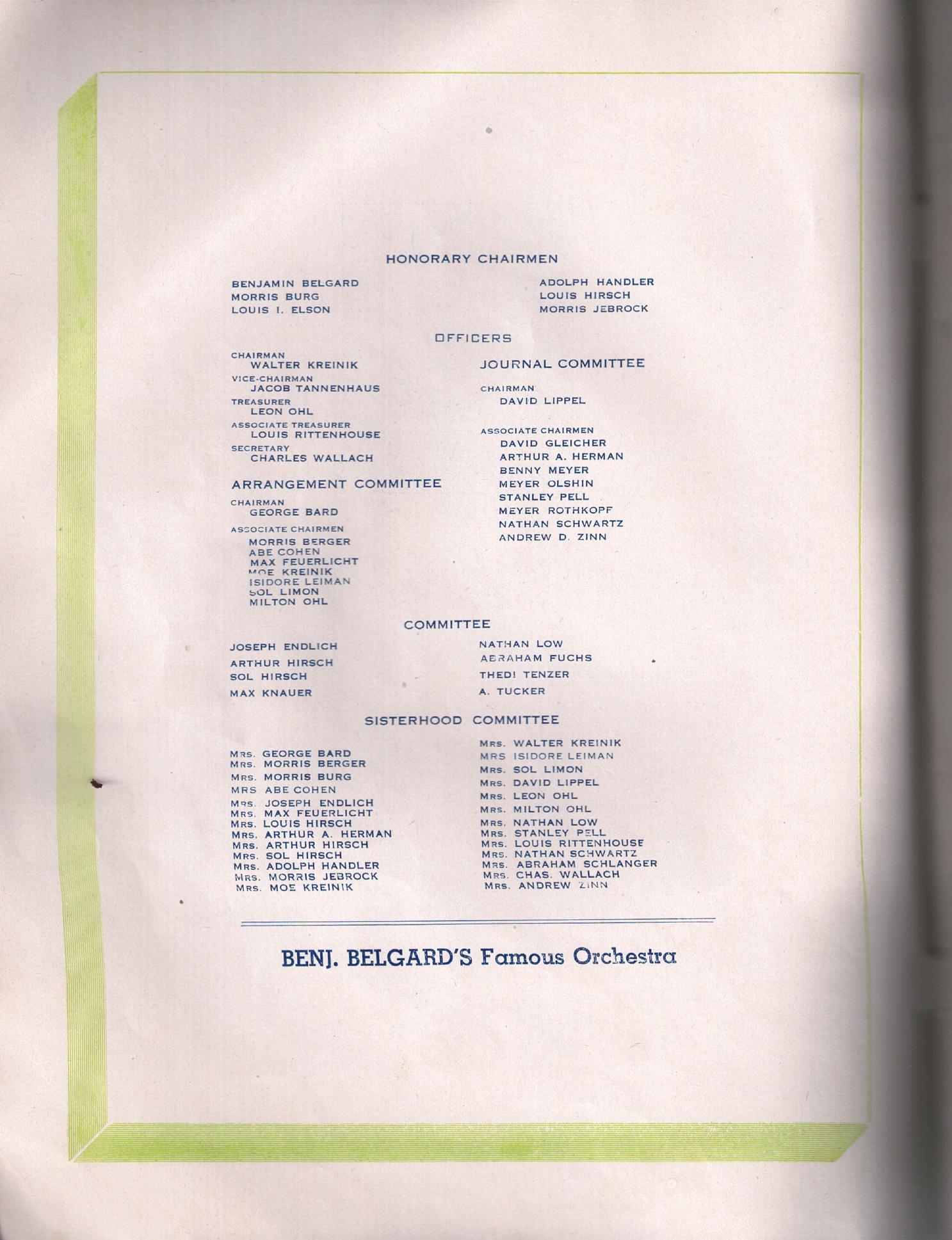
Their work reveals a court larger than one room and more enduring than one evening. It rested on a circle of people willing to organize, give, welcome, and remain attached. In the postwar years, as broken rabbinic families arrived and older Jewish neighborhoods changed rapidly, that loyalty allowed the Shendishover address in New York to remain a living place.