טובים מאורות · האיסט־סייד
A Chassidic court in the heart of the Lower East Side
The American chapters of Tovim Me’orot portray Rabbi Yisroel Dovid Horowitz’s home and beis medrash as a place where inherited avodah, uncompromising observance, hospitality, counsel, and relationships across many Chassidic circles met.
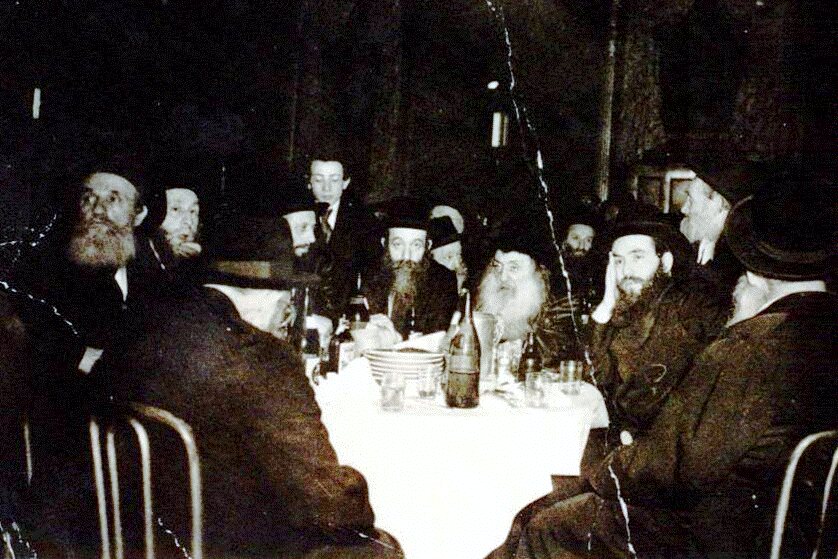
The house carried an older world
The source does not describe the East Side court merely as an institution. It presents Rabbi Yisroel Dovid as carrying the inner life of Ropshitz, Melitz, Shendishov, and the world of his father into an American setting where that full form of Chassidic life was difficult to maintain.
His home became an address for tefillah, the tish, Torah, counsel, brachos, food, and lodging. The Rebbetzin’s hospitality is part of the account: those who entered for spiritual need were also received and cared for materially.
Continuity required courage
Tovim Me’orot devotes substantial space to chinuch, dress, Yiddish, kashrus, bris milah, and resistance to religious compromises that had become common. These episodes are not presented as nostalgia. They show the form taken by rabbonus when ordinary Jewish observance itself required unusual firmness.
The attempted establishment of a Chassidic cheder and yeshivah, the public campaign concerning standards of milah, and work alongside other Rebbes place the Shendishover court within the larger struggle to build uncompromised Jewish life in America.
People arrived from many circles
The publication says that the Rebbe’s followers numbered in the hundreds and came from several streams: older Shotzer Chassidim, families attached for generations to Shendishov, people who had first attached themselves to Rabbi Tuvia during his visits, and Jews of other Galician and Polish courts who found their place at the East Side tish.
Among the named followers and witnesses are Rabbi Elikim Getzel Feldhammer, Rabbi Aharon Flohr, Rabbi Moshe Shechter, Rabbi Yaakov Feigenbaum, Rabbi Kalman Girer and his son Rabbi Dovid Lippel, Rabbi Yossel Endlich, Rabbi Leiber Hirsch, and Rabbi Hershel Schiff. Their names are beginnings of individual records, not a decorative list: each can open into origin, relationship, descendants, testimony, and surviving documents.
Beyond one neighborhood
The source explicitly notes followers outside the Lower East Side and outside New York who came for Yom Tov, yahrzeits, and weekday visits for counsel and brachah. Other passages connect the court with rabbinic organizations and visiting Rebbes. This is the proper frame for the American story: one holy center, with relationships reaching through numerous communities and families.