יסוד צדיק · דער רבי קומט קיין אמעריקע
When the Rebbe’s arrival became public news
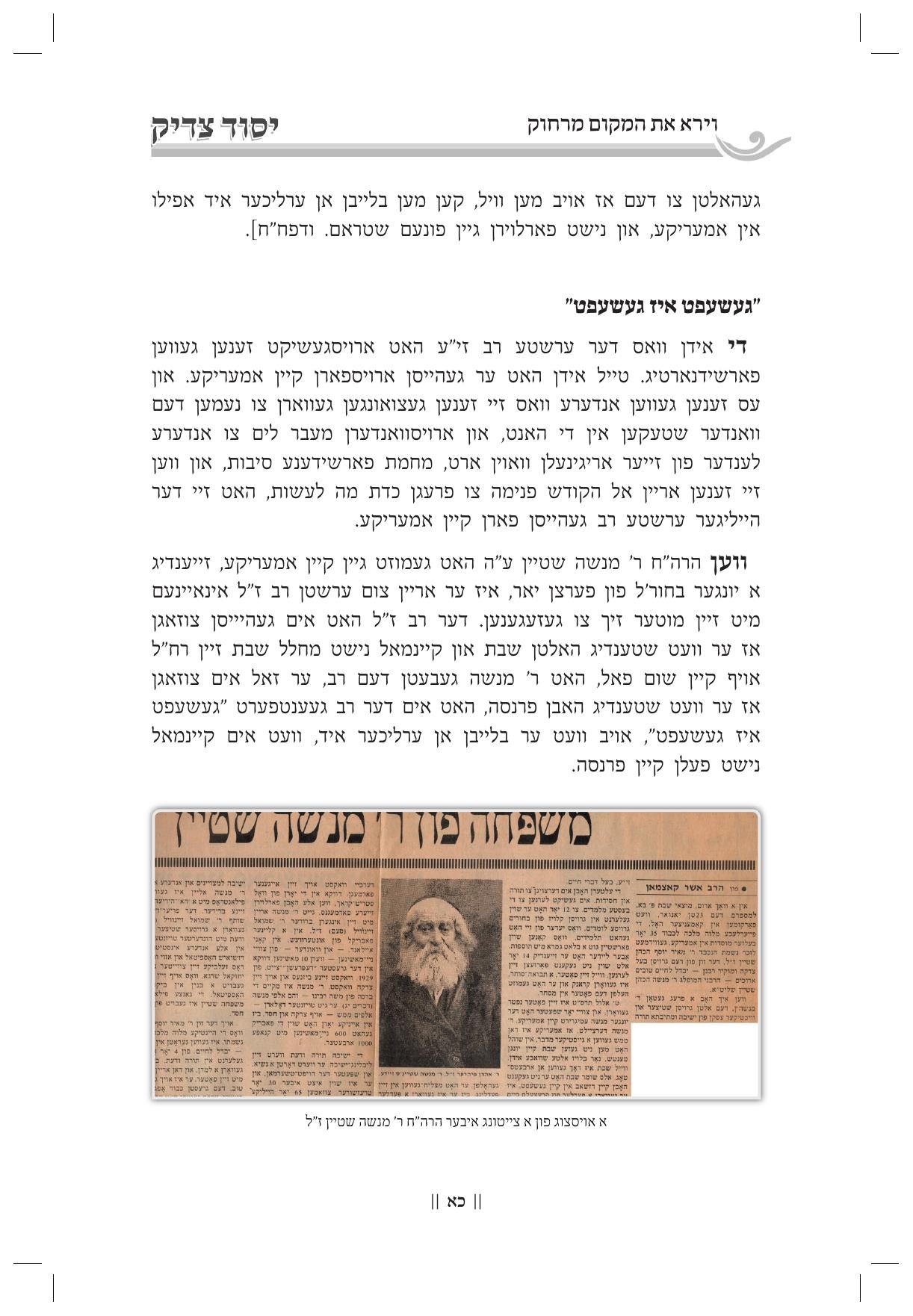
In January 1923, the Yiddish press announced that the Shendishover Rebbe had reached America. For Galician Jews in New York, Rabbi Tuvia’s arrival brought a living figure from the world they had left behind.
News reaches the Jewish street
The announcement appeared in the Yiddishes Tageblatt on January 25, 1923. In the crowded Yiddish newspaper world of New York, such a notice carried the news beyond family circles and private telegrams. Readers from Shendishov, Ropshitz, Melitz, and surrounding towns could learn that a Rebbe they knew—or knew through their parents—was now on American soil.
The arrival was the first of several American journeys. Rabbi Tuvia came not as an immigrant seeking a new position, but as a visiting Rebbe whose home and court remained in Europe.
A ציבור was waiting
For more than twenty years, the First Shendishover Galician Society had provided an organized address for landsleit in New York. Alongside it were individuals and families personally attached to Rabbi Avraham and, later, to Rabbi Tuvia.
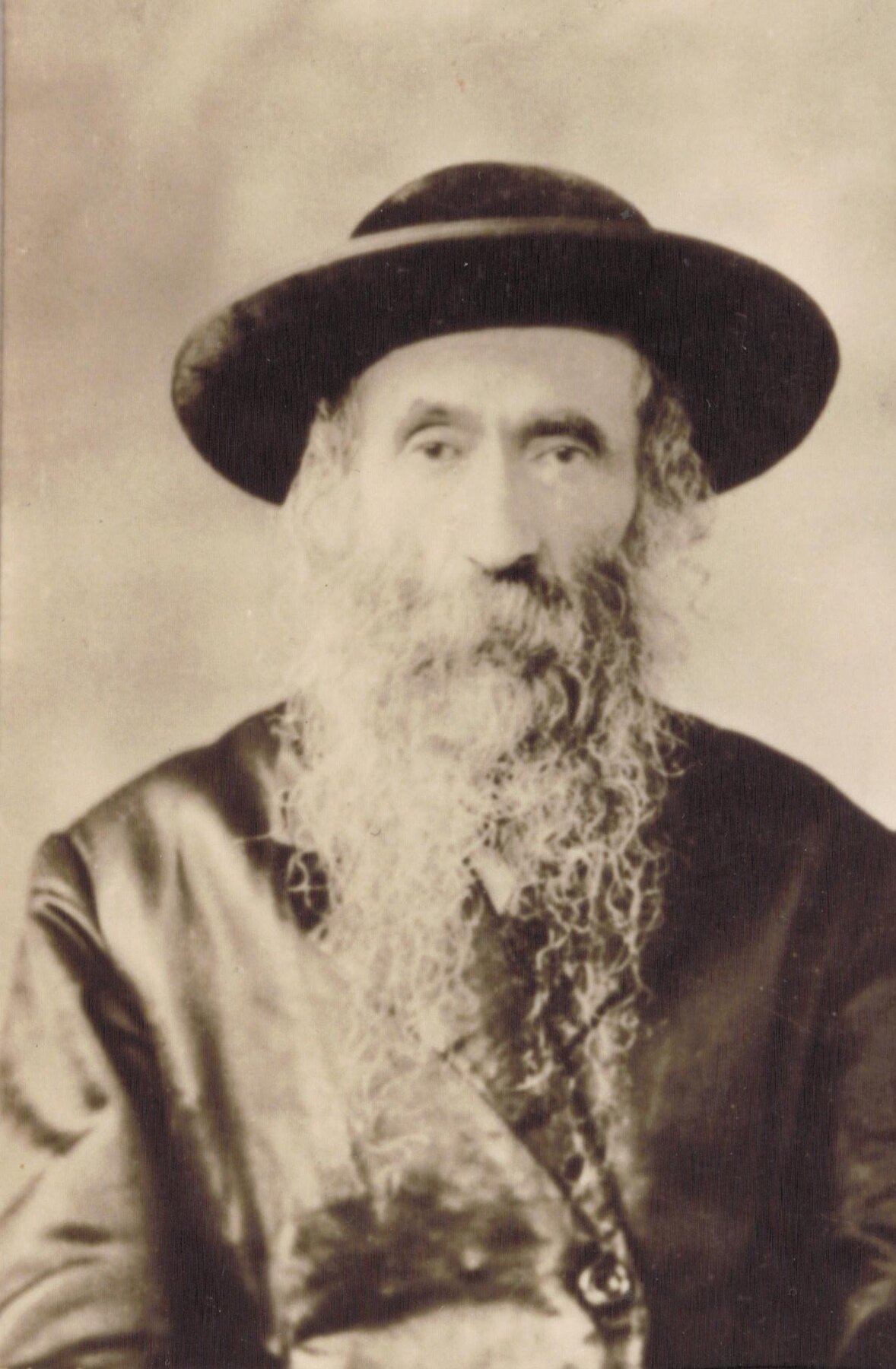
The visit allowed old attachments to take physical form again. People could enter for a brachah, hear Torah, spend a Shabbos in the Rebbe’s presence, and bring their American-born children into contact with the sacred world their parents remembered.
The beginning of the American chapter
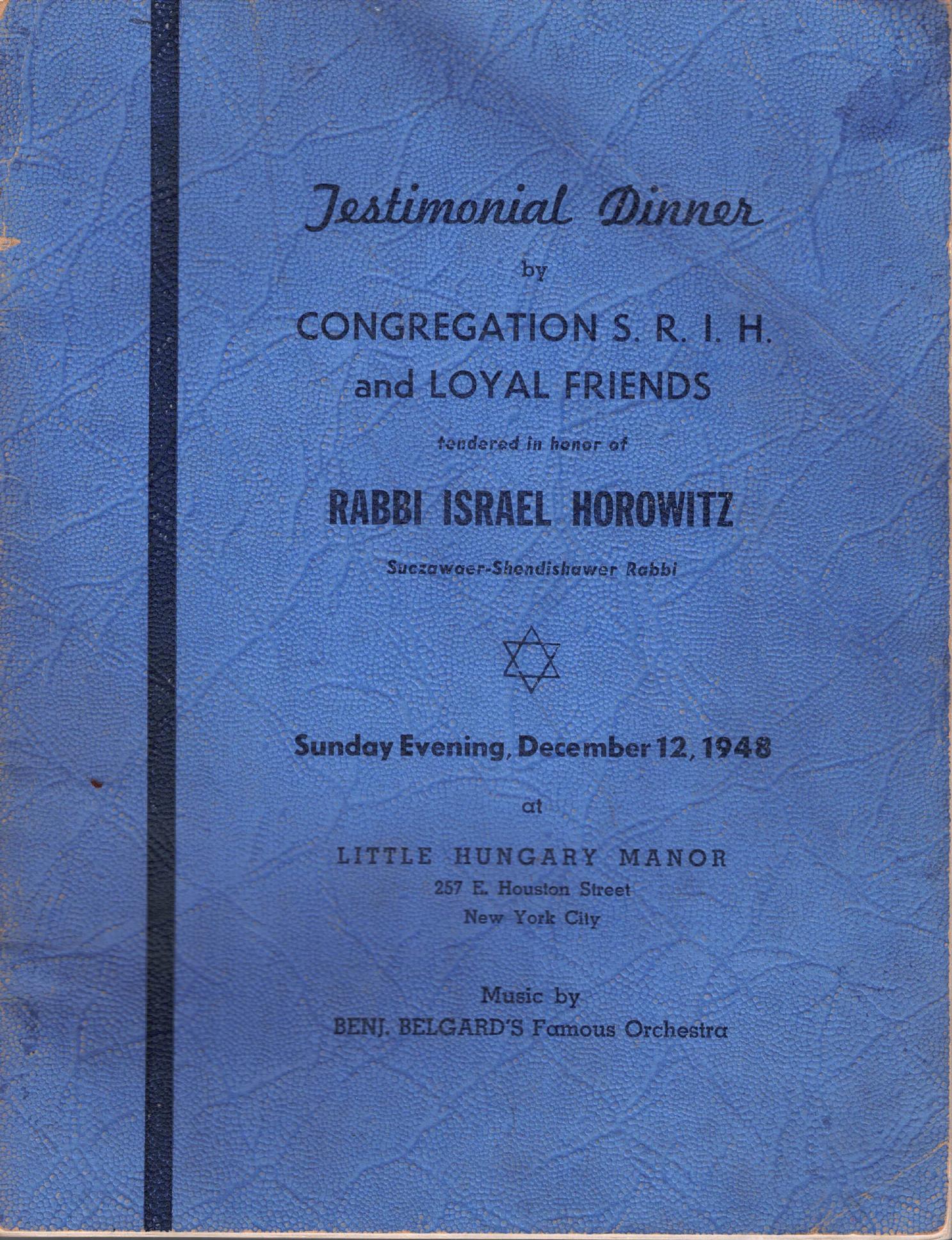
Rabbi Tuvia’s journeys strengthened the circle that later gathered around his son, Rabbi Yisroel Dovid. What began as a visit became part of a larger transition: the center of Shendishover life would eventually move from Europe to New York.
The newspaper headline captures the public moment. The deeper story unfolded afterward—in homes, at tishen, in congregations, and through families who carried their loyalty into another generation.