דברי תורה · כ״ק מרן אדמו״ר שליט״א
Torah that enters the conduct of life
Across the Shendishov publications, the Rebbe’s Torah is presented as a derech in avodas Hashem: thought must become tefillah, conduct, responsibility, and deed.
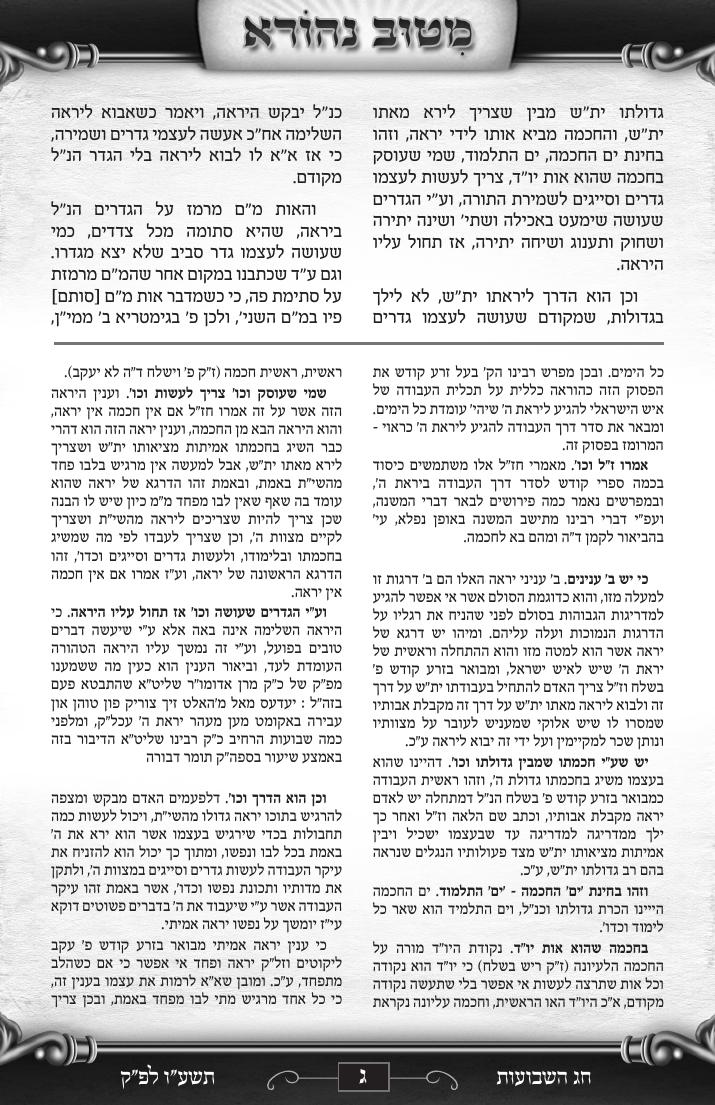
תורה ויראה
The Shavuos writings join receiving the Torah with yirah, humility, and preparation. Learning is not isolated from the person who learns: it asks for an honest vessel, a receptive heart, and a life able to carry what was learned.
This is why the publications repeatedly arrange the Rebbe’s words beside the Torah of Ropshitz and the earlier Shendishover Rebbes. The purpose is continuity of derech: inherited Torah clarified for the avodah of the present.
From learning to practice
A major treatment of limud haTorah in the Av–Elul 5778 issue begins with the call to add learning from Tu B’Av onward. It develops a practical order: Torah as the opening of teshuvah, knowledge of the halachos that govern daily life, and steady addition rather than momentary inspiration.
The editorial method reflects the message. Sources are reproduced carefully, the Rebbe’s explanations are placed alongside them, and the reader is led from the words of the seforim toward a concrete seder of life.
A growing written treasury
Short teachings first distributed through recurring sheets and Yom Tov booklets were gathered again, reviewed, arranged by parshah and season, and expanded into Pnei Chaim. The printed volume makes visible years of speaking, listening, writing, checking, and transmitting.
The article carried forward
Later notes, shiur records, unpublished working texts, and the editorial plans behind the seforim add subjects and cross-references that the early booklets could not yet contain. They are used here to locate the full arc of a teaching; each public claim remains tied to the Rebbe’s recorded words or a verified publication record.